
Grasshoppers
Why are grasshoppers a problem?
Grasshoppers are natural lawn mowers that stimulate plant growth. However, once they hit a certain population threshold, they can cause severe damage to desirable vegetation. Typically only certain pest species of grasshoppers can grow to damaging population levels.
Grasshoppers are listed on the state designated pest list.

This picture shows a 3rd to 4th instar grasshopper.
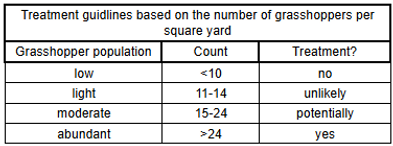
How to Sample Hopper Numbers
Select a random point several feet away and visualize a one-square-foot area surrounding it. Walk toward this location while focusing on the defined area, counting all grasshoppers observed within or jumping out of the square. Repeat this process 18 times, sum the counts, then divide by two to estimate the number of grasshoppers per square yard.
Sampling locations should be randomly selected and represent a range of vegetation types. When grasshoppers are in early developmental stages, it may be necessary to position yourself closer to the ground to ensure accurate observation.
In addition to counting grasshoppers, it is important to know their life stage (instar). Grasshoppers go through 5 stages of development generally centered around their wing growth (see reference below).
Large scale aerial treatments are ineffective if the grasshoppers develop past instars 1 through 3. This means monitoring and reporting should be done in early spring.
Remember to report early. SCWP cannot provide large scale grasshopper relief unless high density populations of 1 through 3 instar hoppers are reported early in the season.

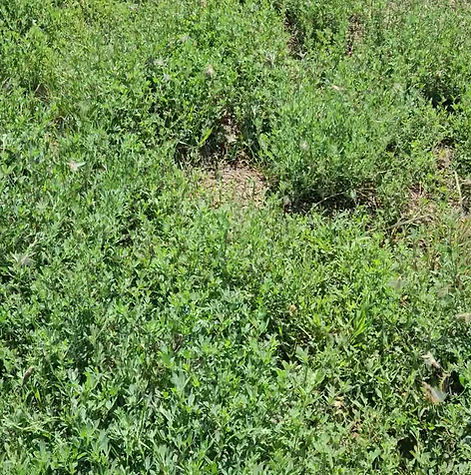
The above video shows a bad grasshopper infestation.
Be careful not to confuse 1st & 2nd instar grasshoppers with leafhoppers!
Leafhoppers are 1/4 inch long, varying colors, and have a similar jumping pattern to grasshoppers.

Shown above is a leafhopper.
General Treatment
Bran Bait
We have EcoBran available for purchase at a 50/50 cost share to help manage grasshoppers in smaller areas or gardens. EcoBran is an environmentally sensitive bait that affects the grasshopper's mouthparts. It does not harm birds or beneficial insects and is effective at a low concentration. It can be used anytime the grasshoppers are active. For pricing please see our 2026 Chemical Price List.
For more information:
View the USDA's informational grasshopper presentation
Identify your hoppers with the University of Wyoming's Grasshopper Manual